What does this mean when choosing decking?
No decking material is automatically the most sustainable choice. The environmental impact of timber, composite, PVC and aluminium depends on the whole lifecycle of the product — including how it is sourced and manufactured, how long it lasts, how much maintenance it needs, how it is installed and what happens when it is removed.
Use the following checklist before you buy:
Choose a product with a realistic, long service life.
Ask how long it is expected to last in your climate and whether that claim is supported by a warranty or reliable product information. A durable deck that does not need premature replacement will usually create less waste.
Example questions to ask:
- “What is the expected service life of this decking in my local climate?”
- “What does the warranty cover, and for how many years?”
- “Can you show me independent testing or product information supporting that lifespan?”
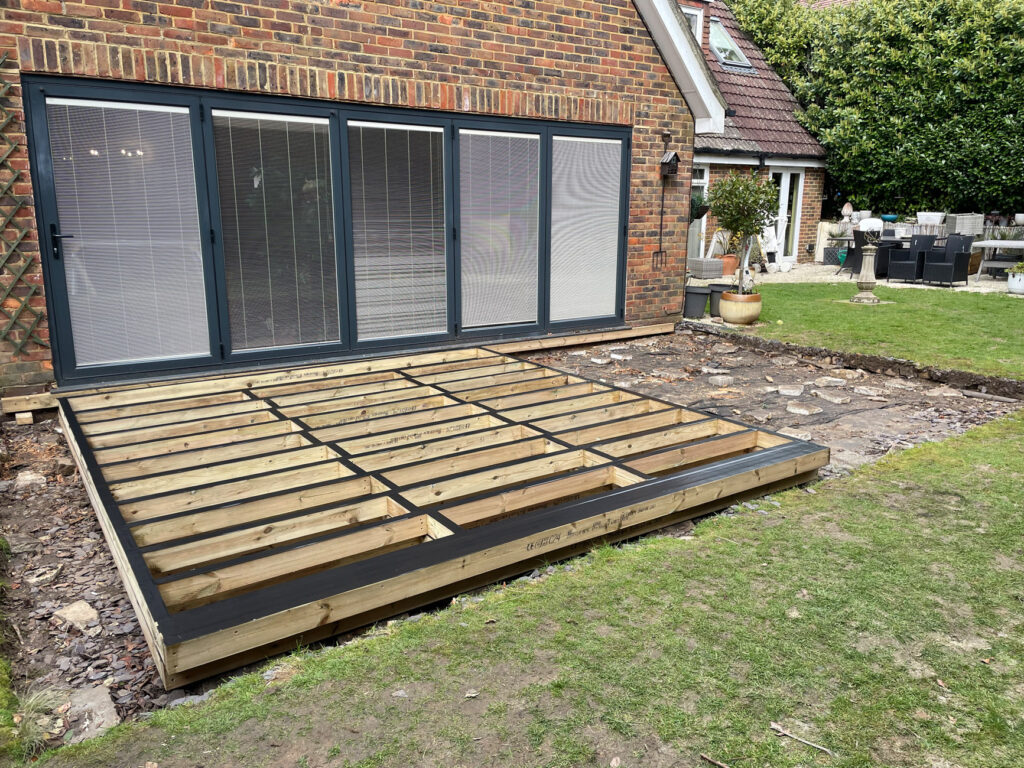
A particularly low-impact option may be a decking system designed for long-term use, such as an aluminium substructure with a 50-year warranty, combined with a recyclable deck board that also has a 50-year warranty. A substructure that is designed to last for decades can remain in place while individual boards are repaired or replaced as needed, avoiding the waste and disruption of removing the entire deck.
Check where the materials come from.
For timber, look for responsibly sourced wood and appropriate certification. For composite, PVC and aluminium, ask about recycled content and the manufacturer’s production processes.
Example questions to ask:
- “Where does the timber come from, and is it FSC or PEFC certified?”
- “What percentage of this composite, PVC or aluminium product is made from recycled material?”
- “Can you provide information about where the raw materials are sourced and manufactured?”
Find out how much maintenance it requires.
Consider the coatings, cleaners and treatments it will need over its lifetime, not just the maintenance required during the first year.
Example questions to ask:
- “What maintenance will this decking need after the first year?”
- “How often will it need cleaning, staining, sealing or treating?”
- “Which products are recommended, and how much are they likely to cost over its expected lifespan?”
Plan for repair rather than replacement.
Choose a system where individual boards, fixings or components can be removed and replaced without dismantling the entire deck. Keep spare boards and installation information where possible.
A deck board that can be easily replaced if it becomes damaged can significantly extend the life of the overall installation. This is especially important when the substructure remains sound. Instead of replacing the whole deck, you may only need to replace one or two boards.
Example questions to ask:
- “Can individual boards be replaced without removing the whole deck?”
- “Are replacement boards, clips and fixings likely to remain available in the future?”
- “Can you provide installation instructions and recommend keeping spare boards?”
- “Can damaged boards be removed without damaging the surrounding boards or substructure?”
Ask what happens at the end of its life.
Check whether the manufacturer offers a take-back scheme and whether the product can be reused or recycled locally. Do not assume that a material labelled “recyclable” will be accepted by your nearest waste facility.
Aluminium can be recycled at the end of its service life, while some decking boards can also be recycled through specialist facilities. However, recycling depends on the product, local waste infrastructure and whether the materials can be separated easily.
Example questions to ask:
- “Does the manufacturer offer a take-back or recycling scheme for old decking?”
- “What normally happens to this product when it is removed?”
- “Which local waste or recycling facilities accept it?”
- “Is the product recyclable in practice, or only technically recyclable under specialist conditions?”
- “Can the decking boards and aluminium substructure be separated for recycling?”
Reduce installation waste.
Use accurate measurements and a cutting plan, and ask your installer how offcuts will be reused or disposed of. Design the deck around standard board lengths where practical.
Example questions to ask:
- “How much waste do you expect this project to create?”
- “Will you prepare a cutting plan before ordering the materials?”
- “Can any offcuts be reused elsewhere in the project?”
- “How will unused materials and waste be disposed of?”
Install it correctly.
Good substructure, drainage, ventilation and fixing details can significantly extend the deck’s life. Poor installation can lead to early failure, creating avoidable waste regardless of the material chosen.
A durable aluminium substructure can be a strong option where it is correctly designed and installed. If it is built to last for 50 years and supported by a 50-year warranty, it may provide a stable foundation for several generations of deck boards. If the boards are recyclable and can be replaced individually, the deck can be maintained over time rather than treated as a single-use installation.
Example questions to ask:
- “How will you provide adequate drainage and ventilation beneath the deck?”
- “What substructure and spacing do you recommend for this product?”
- “Which fixings and installation methods are required to protect the warranty?”
- “What experience do you have installing this particular decking system?”
- “Can the substructure remain in place if individual boards need to be replaced?”
In short, choose decking by asking four questions:
Will it last? Can it be repaired? Can it be responsibly disposed of or recycled? And can it be installed with minimal waste?
A long-lasting aluminium substructure, combined with a recyclable deck board that carries a 50-year warranty and can be replaced individually, can create a low-impact decking system. Its environmental benefit comes from the complete design: a durable foundation, a long service life, minimal maintenance, straightforward repairs and the ability to recycle the materials at the end of their useful life.
Sustainability is not determined by the decking board alone. It is the result of every decision made from the extraction of raw materials and manufacturing through to installation, maintenance, repair, removal, reuse and recycling.